
Biology · Genetics
Genetics, made revisable.
Mendel's ratios, Punnett squares, chromosomes and DNA — the core ideas in one place, with a quick-reference table and a way to keep them in memory.
What to revise
The four ideas everything else builds on.
Most genetics questions come back to a handful of concepts. Get these solid first.
-
Mendel's laws
Dominance, segregation and independent assortment — and the crosses that show each one.
-
Beyond Mendel
Incomplete dominance, co-dominance, multiple alleles and polygenic traits, where the classic ratios change.
-
Chromosomes and sex determination
How genes sit on chromosomes, how linkage and crossing over work, and how sex is determined.
-
DNA to protein
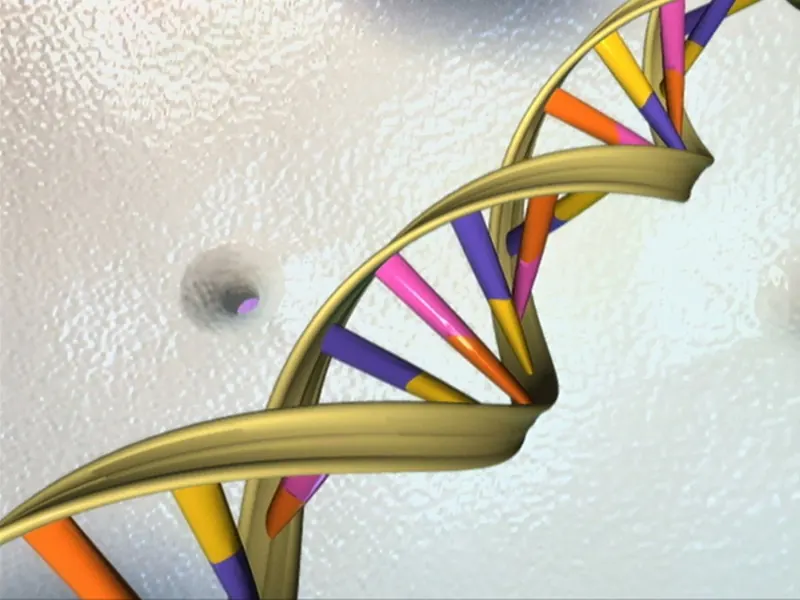
The double helix, replication, transcription and translation — the molecular basis of inheritance.
Worked example
Read a Punnett square in ten seconds.
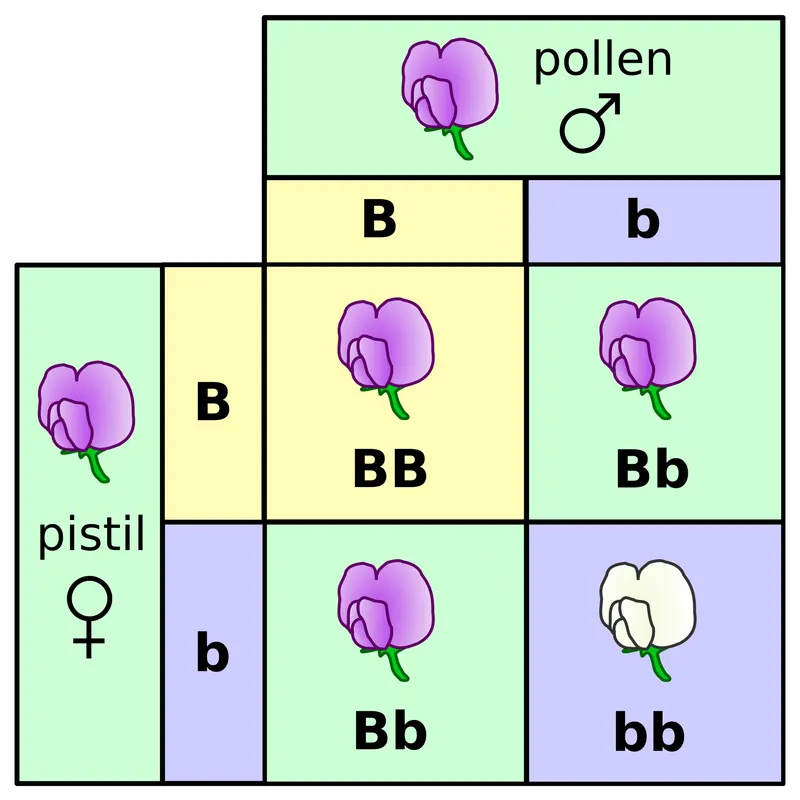
Write one parent's gametes across the top and the other's down the side, then fill each box with the pair of alleles it receives.
For two heterozygous parents (Bb × Bb) the boxes give 1 BB : 2 Bb : 1 bb. Because B is dominant, three of the four show the dominant trait — the 3:1 ratio.
- Gametes carry one allele per gene
- Each box is one equally likely offspring
- Genotype ratio 1:2:1, phenotype ratio 3:1
Quick reference
Crosses and the ratios they give.
The F2 ratios that come up again and again. If a question's numbers match one of these, you know which pattern you are looking at.
| Pattern | Example | Genotype ratio | Phenotype ratio |
|---|---|---|---|
| Complete dominance | Tall × dwarf pea | 1 : 2 : 1 | 3 : 1 |
| Incomplete dominance | Snapdragon flower colour | 1 : 2 : 1 | 1 : 2 : 1 |
| Co-dominance | AB blood group | 1 : 2 : 1 | 1 : 2 : 1 |
| Dihybrid, independent assortment | Seed shape and colour in pea | 9 genotypes | 9 : 3 : 3 : 1 |
| Test cross (heterozygote × recessive) | Tt × tt | 1 : 1 | 1 : 1 |
FAQ
Genetics — frequently asked questions
What is the difference between a genotype and a phenotype?
The genotype is the set of alleles an organism carries, such as Bb. The phenotype is the trait you can observe, such as purple flowers.
Why does a monohybrid cross give a 3:1 ratio?
Two heterozygous parents each pass on B or b with equal chance, giving BB, Bb, Bb and bb. Three of the four carry the dominant allele and show the dominant trait.
What is a test cross used for?
Crossing an organism showing the dominant trait with a homozygous recessive one reveals its genotype: all dominant offspring means it was homozygous, a 1:1 ratio means heterozygous.
How can Revisable help with genetics?
Revisable combines flashcards with spaced repetition, question banks and an AI tutor, so you can practise crosses and revisit the concepts you get wrong.
Keep genetics in memory.
Flashcards with spaced repetition and practice questions, scheduled for when you need them.